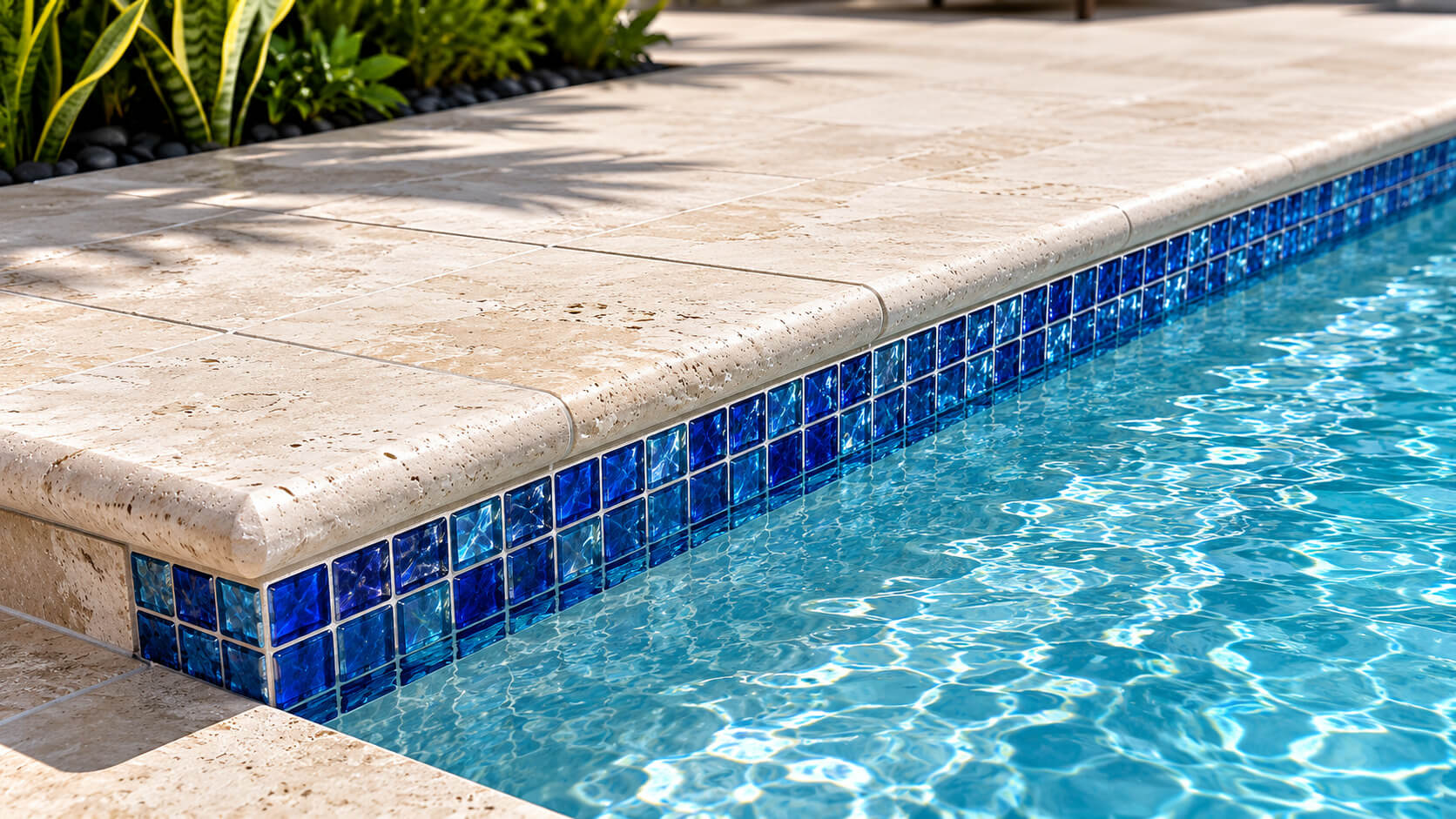
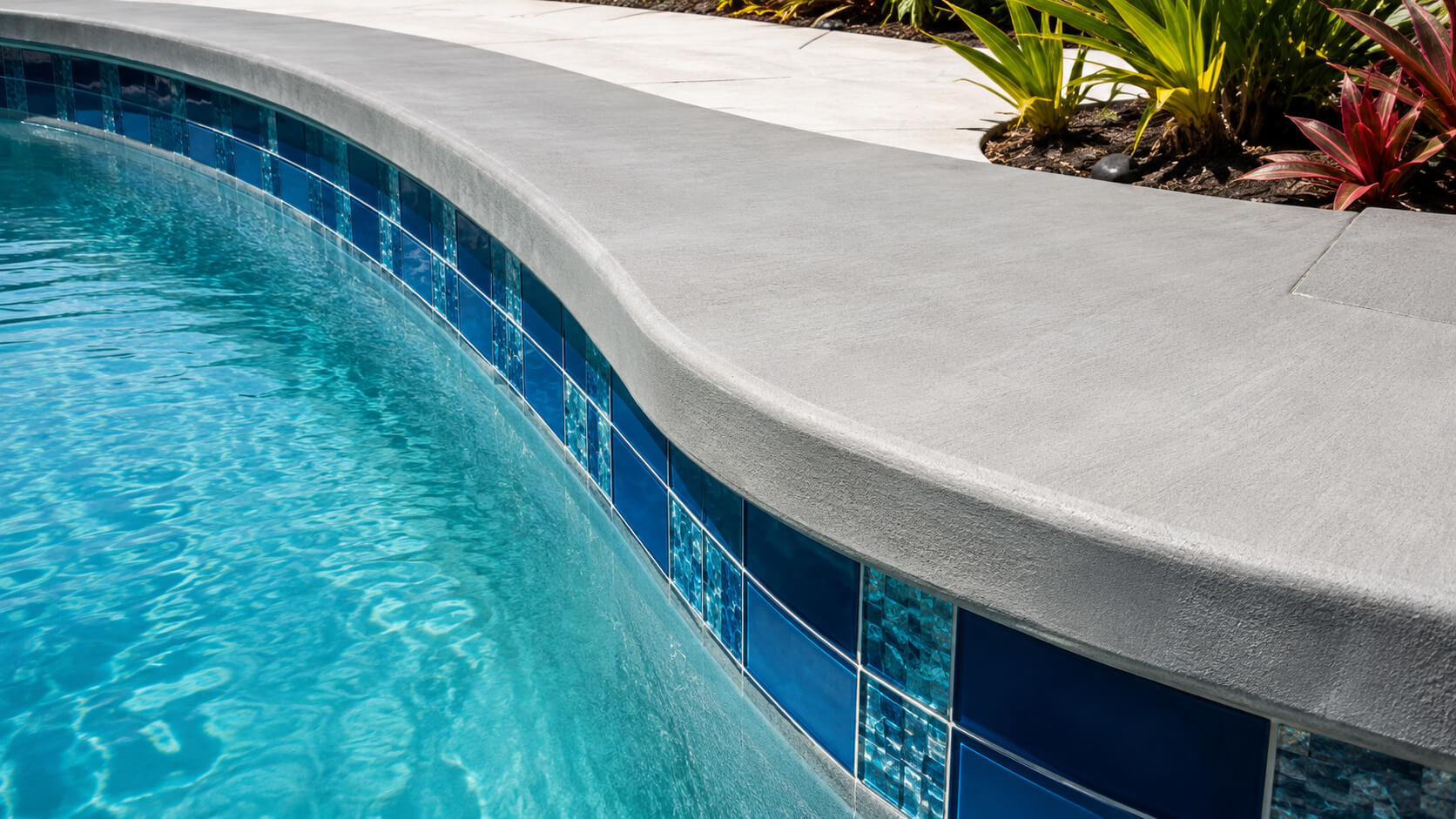
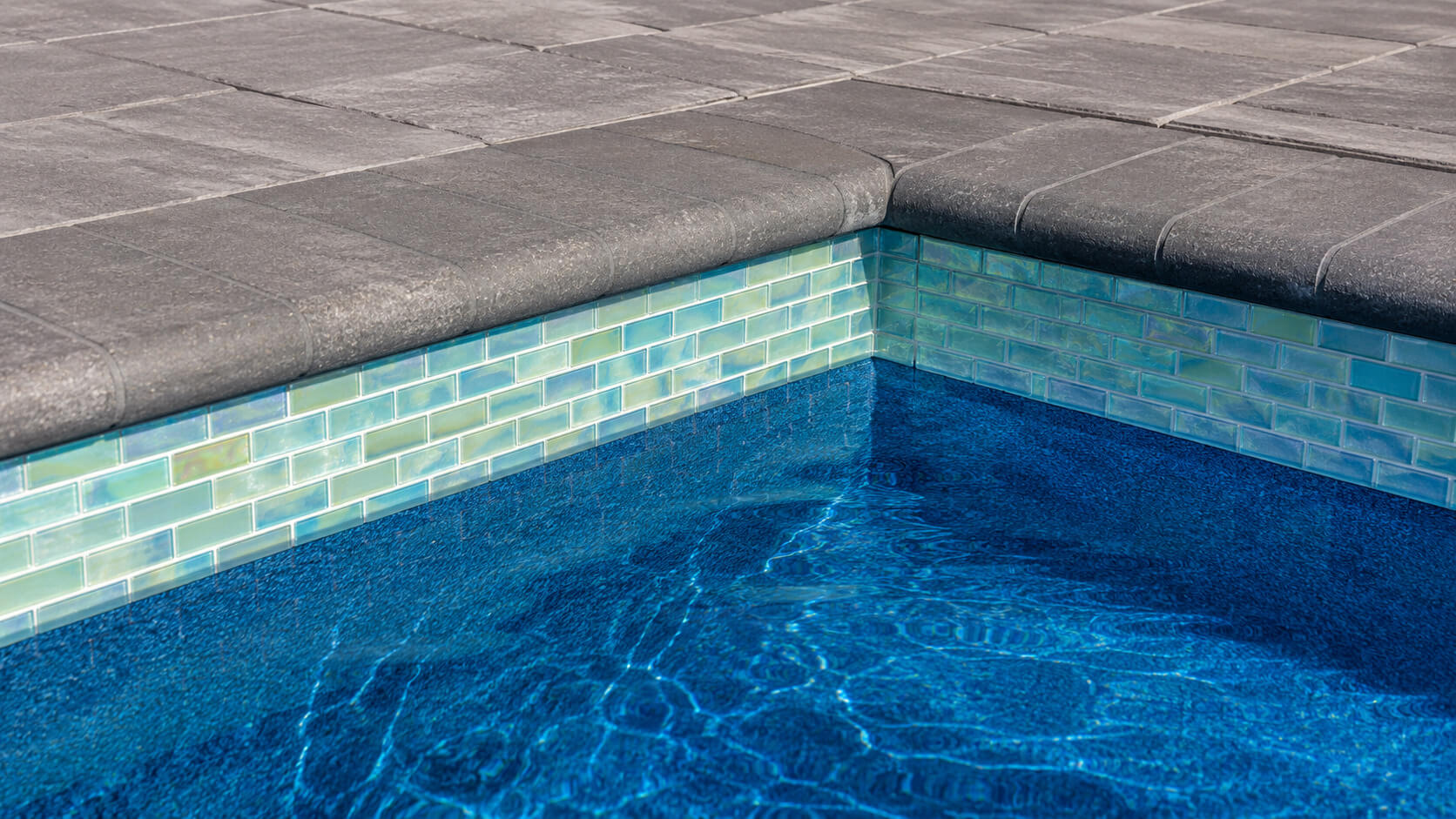
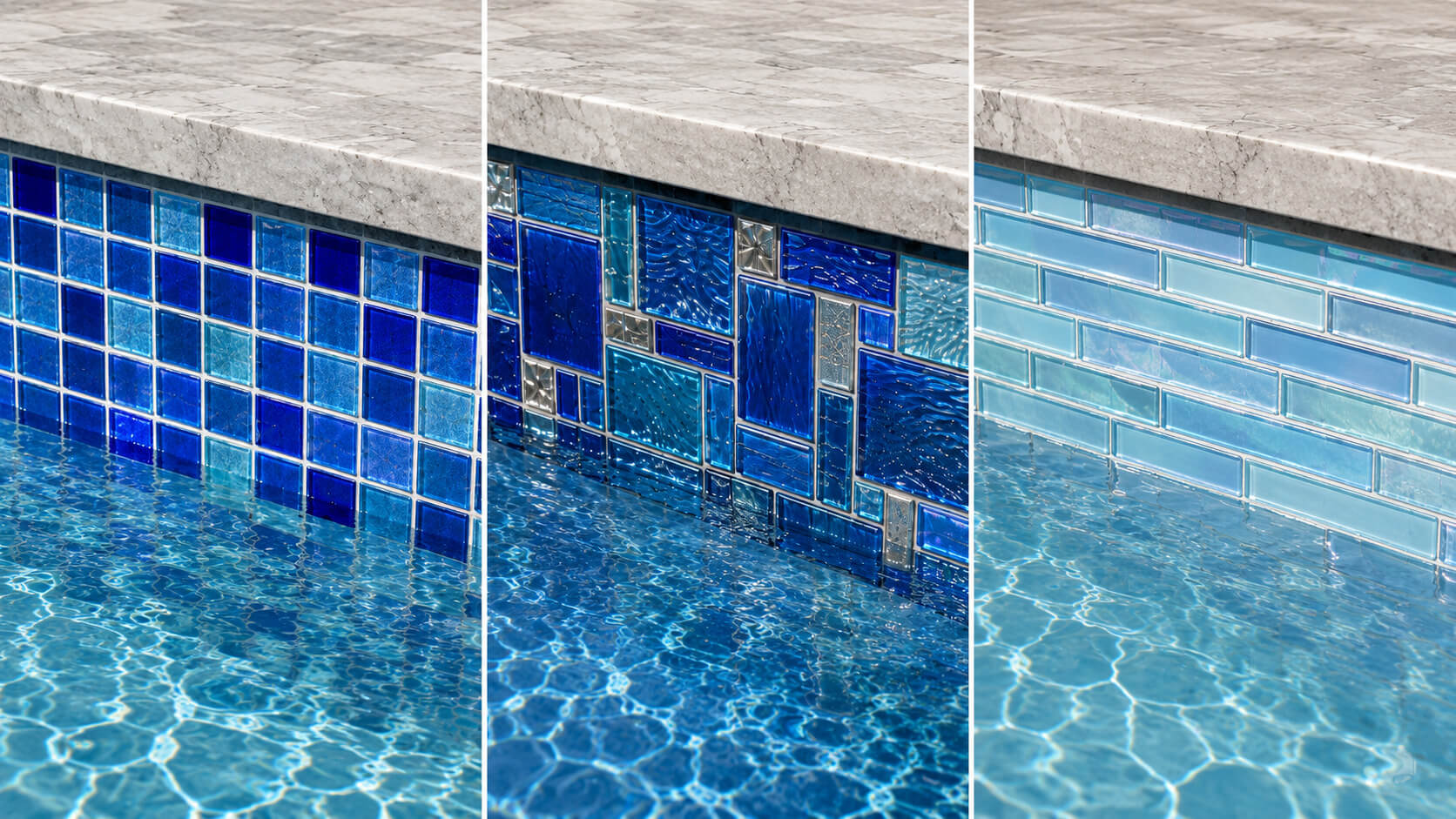
Tile and coping are not just decorative — both serve important functional roles. The waterline tile band protects the area of the pool most exposed to chemical fluctuation, UV light, and the constant wet-dry cycle that occurs at the waterline. Coping caps the top edge of the pool wall, providing a finished transition between the pool shell and the surrounding deck while also protecting the bond beam from water intrusion — critical during the June-through-October Gulfstream rainy season.
In Gulfstream, both components face more stress than in most other climates. Strong Atlantic salt air, coastal UV, the heat expansion and contraction of long summers, and the chemistry demands of near year-round pool use all accelerate wear. Grout fails, tile loosens, and coping shifts or cracks when materials are not suited for these barrier-island conditions or are not installed correctly.
When tile and coping are in good shape, the pool looks intentional and well-maintained — the standard expected across Gulfstream's oceanfront estates. When they fail, the deterioration is visible and tends to compound — loose tile allows water intrusion, which weakens adjacent sections, and coping that has lifted away from the shell creates safety hazards and drainage problems that only worsen through the wet season.